

Navigating Dissociation in Ketamine-Assisted Psychotherapy: A Somatic Perspective

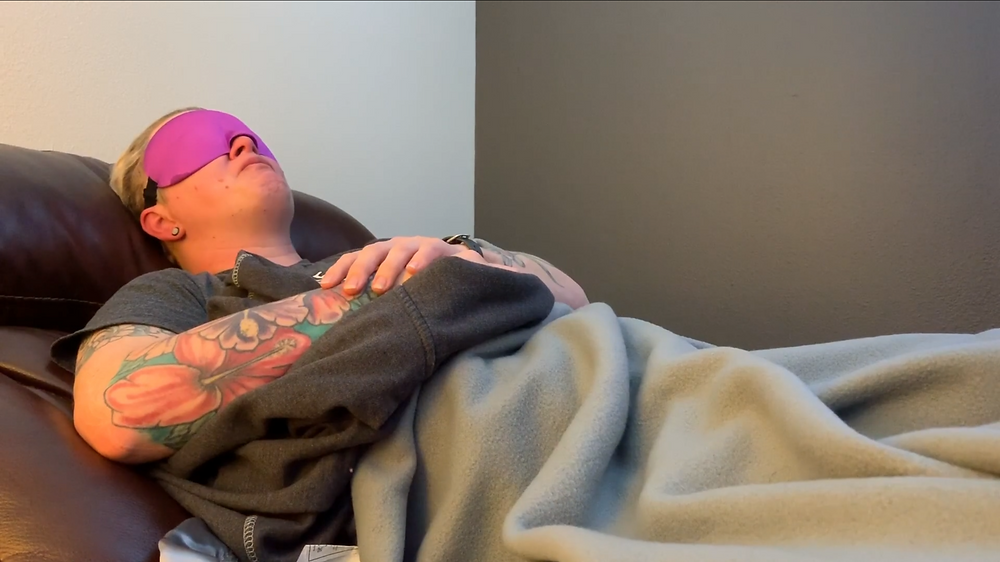
In my practice as a therapist specializing in somatic trauma work and Ketamine-Assisted Psychotherapy, I often witness the profound desire for healing that draws individuals to explore new therapeutic avenues. Psychedelic-assisted therapies, including Ketamine-Assisted Psychotherapy, are gaining significant attention for their potential to facilitate deep transformation. However, as a thought-provoking article by Saj Razvi from the Psychedelic Somatic Institute reminds us, the journey isn't always linear, and profound healing doesn't come with a guarantee. One of the most critical, yet often invisible, factors that can influence the outcome of psychedelic therapy is our nervous system's capacity for dissociation.
Understanding Dissociation in the Context of Ketamine-Assisted Psychotherapy
Dissociation, at its core, is a brilliant, involuntary defense mechanism our bodies employ when faced with overwhelming threat. It's not a conscious choice but a deep, bottom-up, psychobiological response orchestrated by our autonomic nervous system. When our system perceives that active survival strategies have failed, it can shift into a state of numbing, releasing endogenous opioids that create a sense of detachment, lethargy, or even a feeling of being disembodied. As the article points out, this can range from mild detachment to profound states where one feels their body is made of non-living material.
What I've observed in my work, particularly with individuals who have experienced complex or developmental trauma, is how deeply ingrained this protective pattern can become. For many, dissociation has been a lifelong companion, a way to survive environments that felt unsafe or overwhelming. It's a testament to our innate resilience, yet it can also create a profound disconnection from our felt sense, emotions, and even our own identity. This isn't a failure of the individual; it's a testament to the nervous system's adaptive wisdom, however challenging it might feel in the present.
The Unseen Challenge in Psychedelic Sessions
When we approach powerful modalities like Ketamine-Assisted Psychotherapy, the expectation is often for profound insights, emotional release, or vivid experiences. And often, that's precisely what happens! However, the article highlights a crucial nuance: if dissociation is deeply embedded, it doesn't simply disappear because a psychedelic is introduced. In fact, the body's protective mechanisms, honed over years, can still activate.
The article describes how clients undergoing psychedelic therapy, even with strong doses of medicine like MDMA, might report feeling unexpectedly sober, sleepy, or even bored. They might believe the medicine isn't working, or that they received a placebo. This isn't a sign of resistance or a 'failed' session; it's often the nervous system's well-practiced dissociative response at play. Our internal pharmacy, as the article eloquently puts it, can release powerful numbing agents, effectively dampening the psychedelic experience.
From a somatic perspective, this 'blankness' or 'nothingness' is not truly nothing. It's a very pregnant something, as the article beautifully states. It's the felt sense of dissociation itself, the protective wall that the nervous system has built. Ignoring it or trying to bypass it in favor of more 'exciting' imagery or insights means missing the very heart of the trauma that needs to be engaged.
A Somatic Approach to Engaging Dissociation
This is where the principles of somatic therapy, like Sensorimotor Psychotherapy, become indispensable, especially for those exploring Ketamine-Assisted Psychotherapy in California and beyond. Rather than pushing past the blankness, we learn to gently lean into it. In my practice, when a client experiences this numbing or detachment during a session, we don't dismiss it. Instead, we bring mindful awareness to the direct, felt sense of that experience.
• Staying with the 'Nothingness': We might explore, "What does this 'boredom' feel like in your body? Is there a texture, a temperature, a subtle sensation around it?" The goal isn't to make it go away, but to be curious about its presence. This can feel counterintuitive, as both client and therapist might have an impulse to 'get the session going,' but trust in the process is key.
• Embodied Observation: If a client describes vivid imagery, we gently inquire, "Can you feel that image in your body? Where does it land?" If the imagery doesn't have a felt sense, it can often be a distraction, a 'puppet show' put on by the mind to keep deeper, more vulnerable material at bay. Our work is to re-orient to the body's direct experience.
• Titration and Pacing: Understanding that dissociation is a protective response means we approach it with immense respect and care. We don't force or overwhelm the system. We move at the pace the body allows, gently inviting connection rather than demanding it. As the article notes, staying with the blankness might take minutes or hours, but eventually, it often 'cracks,' revealing the underlying material that caused the need for dissociation in the first place.
By engaging dissociation at the autonomic, felt-sense level where it was created, we provide the nervous system with a new experience. We teach it that it's safe to be present, even with the 'nothingness.' This deep, embodied work allows for true integration of the material that emerges, transforming old protective patterns into new capacities for presence and connection. It’s an essential part of effective ketamine-assisted psychotherapy in California and other psychedelic-assisted modalities.
Healing is a journey of coming home to ourselves, and sometimes, that means gently knocking on the door of our own protective defenses. If you're curious about how a somatic, integrative approach can support your healing journey, I invite you to explore my website further.
If you're considering a path of deeper healing and want to understand how Ketamine-Assisted Psychotherapy or somatic trauma therapy might support you, I offer a free 15-minute consultation. Visit bodymeetmind.com to learn more and schedule a time to connect. I look forward to hearing from you.


