Beyond Words: Unraveling the Prenatal Shadow and Healing Our Earliest Stories

Have you ever felt a deep-seated pattern within you, a way of reacting or experiencing the world, that feels older than any memory you can consciously recall? Perhaps it's a persistent anxiety, a challenge in forming secure attachments, or a subtle sense of not quite belonging. In my practice, I often encounter clients who are grappling with these elusive feelings, searching for answers that lie beyond their conscious narratives.
The Unseen Beginnings: Our Earliest Chapters
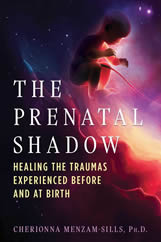
It's a profound thought: our story doesn't begin with our first breath, but much, much earlier. The latest research in prenatal and perinatal psychology, beautifully illuminated in works like Cherionna Menzam-Sills' new book, The Prenatal Shadow: Healing the Trauma Experienced Before and at Birth, reminds us that our earliest experiences—even in the womb and during birth—lay a foundational blueprint for our nervous system and our sense of self. This isn't just theory; it's a growing field grounded in scientific exploration of the autonomic nervous system, cellular memory, and early brain development.
What Dr. Menzam-Sills and other pioneers in this field help us understand is the concept of 'implicit memory.' Unlike explicit memories, which are conscious recollections of events, implicit memories are non-conscious. They are felt senses, bodily patterns, emotional responses, and relational tendencies that are encoded in our nervous system and body long before we have the capacity for language or conscious thought. Our bodies remember, even if our minds don't have the words.
The Echoes of the Prenatal Shadow
The idea of a 'prenatal shadow' speaks to those early, often challenging, experiences that can shape our physiology and consciousness. These aren't necessarily dramatic traumas, but could be subtle stressors experienced by the birthing parent, complications during birth, or even the emotional landscape surrounding conception. The body of the 'little one,' as Dr. Menzam-Sills so tenderly puts it, is incredibly sentient and responsive. It's absorbing, adapting, and creating a framework for safety and connection based on these earliest interactions.
In my work as a somatic trauma therapist, this understanding is crucial. When a client expresses a persistent feeling of being unsafe, even when intellectually they know they are safe, or struggles with overwhelm and dysregulation without a clear trigger, I often consider the possibility of these earlier, implicit layers. Our nervous system, in its brilliant attempt to protect us, may be responding to echoes of these pre-verbal experiences.
Embodied Healing: Listening to What Your Body Already Knows
Healing these early layers isn't about dredging up conscious memories that may not exist. Instead, it's about learning to listen to what your body already knows. This is where somatic practices truly shine. Through gentle, body-centered awareness, we can begin to track sensations, movements, and impulses that arise, allowing the nervous system to complete incomplete actions or to process stored energy in a safe, titrated way.
Modalities like Sensorimotor Psychotherapy, which I integrate into my practice, provide a framework for working with these implicit memories. It's about helping the body tell its story, not through words, but through sensation, movement, and a gradual, supported integration of past experiences into a more coherent present. Ketamine-Assisted Psychotherapy (KAP) can also offer a unique pathway to access these deeper states of consciousness, allowing for profound shifts and insights that bypass the usual mental defenses.
Furthermore, understanding our earliest experiences can shed light on our relational patterns. How we learned to attach, to feel safe, or to navigate connection in those foundational moments can profoundly impact our adult relationships. This is why aspects of Gottman Method couples therapy, which focuses on building secure relational foundations, can be so complementary to this deeper individual work. It's about creating new, healthier embodied experiences of connection in the present.
A Path Towards Integration and Wholeness
Healing the prenatal shadow is not about blaming our beginnings, but about understanding them. It's about offering compassion to that earliest version of ourselves and giving our nervous system the opportunity to re-pattern and find a new sense of regulation and wholeness. It's a journey of integration, allowing the fragmented parts of our experience to come together, leading to a greater sense of peace, resilience, and authenticity.
I believe that when we invite these earliest stories into our awareness, not through intellectual understanding alone, but through the wisdom of our embodied experience, we unlock profound capacities for healing and growth. It's a testament to the incredible resilience of the human spirit and the body's innate capacity for self-righting.
If you find yourself curious about how your earliest experiences might be shaping your present, or if you're seeking a path to deeper healing and integration, I invite you to explore this journey. You don't have to navigate these complex layers alone. I offer a free 15-minute consultation to discuss how somatic trauma therapy, KAP, or other integrative approaches might support you on your path.
Learn more and book your consultation at bodymeetmind.com.
—
This post was inspired by the article "The Prenatal Shadow: Healing the Trauma Experienced Before and At Birth". Click the link to read the full original article.